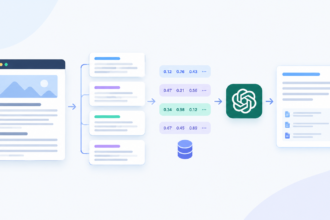


Launch week for an AI agent startup usually looks the same. You post on two or three launch platforms, submit to a dozen directories, mention it in a few communities and maybe land a newsletter mention. Analytics shows a nice spike. A week later the spike is gone, and nobody can say which of those twenty channels was worth the afternoon it took.
That isn’t a marketing problem. It’s a measurement problem, and you can fix most of it before you launch.
1. Why launch week feels busy but teaches little
Three things blur the picture.
First, everything happens at once. When fifteen channels go live within 72 hours, their traffic lands in one undifferentiated bump. Second, much of that traffic is mislabelled. Links opened in apps, email clients and chat tools often arrive as “direct”, and some directories route clicks through redirects that drop the referrer. Third, the metrics that are easiest to see (upvotes, impressions, “views” on a listing page) say almost nothing about whether anyone used the product.
The result is that founders repeat the whole launch checklist next time because they can’t tell what to cut.
2. Set up before you launch
You need three things, and none of them costs money.
A UTM convention, decided once. Pick a format and stick to it, for example utm_source = the channel’s domain (producthunt, futuretools, a newsletter’s name), utm_medium = the channel type (launch, directory, newsletter, community) and utm_campaign = launch-2026-11. When a directory lets you set your own URL, use the tagged one. When it doesn’t, note that in your sheet so you know that channel will show up as a plain referrer or not at all.
A simple channel sheet. One row per channel: name, type, date submitted, date live, the exact URL of your listing, whether the outbound link is followed or nofollow, and whether the URL is tagged. Add three empty columns for day 7 and three for day 30 (visits, sign-ups, first meaningful action). This sheet is the whole system. If a channel isn’t in it, it didn’t happen.
A “how did you hear about us?” field at sign-up. Keep it optional, short and free-text, or a dropdown with “Other”. Self-reported attribution is imperfect, but it catches what analytics misses: the podcast mention, the friend in a Slack group, the AI assistant that recommended you. On small numbers it is often the most honest data you’ll have.
3. The three numbers that matter per channel
For each channel, track only:
- Referral visits: sessions that arrived from that channel (tagged or by referrer).
- Sign-ups: accounts, trials or waitlist joins from those sessions.
- First meaningful action: the first thing that shows real intent. For an agent product that might be running a first task, connecting a data source or inviting a teammate.
Ignore upvotes, listing-page views and social impressions when you decide what to keep. They are fine for morale but don’t predict usage. A channel with 40 visits and 6 users who ran a first task beats a channel with 2,000 visits and none.
4. Channel types and what to expect from each
Different channel types behave differently, so judge each against its own expectations.
Launch platforms (daily leaderboards) produce a sharp, short spike. Most of the value lands within 48 hours. They are good for early feedback and a burst of sign-ups, and less good for steady traffic. Judge them on day-7 numbers.
AI tool and agent directories are slower and smaller per listing, but many keep sending a trickle of visitors for months, and some are indexed well enough to rank for “[category] AI agent” searches. Approval can take anywhere from hours to several weeks. Agent marketplaces such as AI Agent Store are one example of this channel type. Judge directories on day-30 numbers, and record whether the listing is indexed and whether the link is followed.
Newsletters give one concentrated burst of clicks from an engaged audience. Quality varies a lot between issues. Judge them on sign-ups per click, not opens.
Communities (forums, Discord and Slack groups, subreddits) send the most variable traffic, usually small but high-intent if the post genuinely helps people. They often show up as “direct” or in the “how did you hear” field rather than as clean referrers.
5. Reading the data at day 7 and day 30
At day 7, fill in the first three columns. This tells you which channels produced a spike and whether that spike contained any real users.
At day 30, fill in the second set. Now separate spike channels from compounding ones. A spike channel did most of its work in the first week and then stopped. A compounding channel is still sending visitors at day 30, usually because the listing is indexed in search, appears in category pages, or has started being cited when people ask AI assistants for tool recommendations. Compounding channels are often small in week one and easy to undervalue if you only look once.
Two quick checks help here. Search for your product name plus the channel’s domain to see whether the listing is indexed. And ask a couple of AI assistants for recommendations in your category to see which sources they cite. If a directory keeps appearing in those answers, it is worth keeping your listing there accurate and up to date.
6. A cut-or-keep rule
Write the rule down before you look at results, so you don’t talk yourself into keeping favourites. One that works for small teams:
- Keep and repeat: any channel with at least one sign-up that reached a first meaningful action by day 30.
- Keep but don’t invest more: channels with visits but no activated users, if the listing is indexed and costs nothing to maintain.
- Drop: channels with no measurable visits by day 30, and any channel that only offers paid upgrades to become visible.
Re-check kept channels once a quarter. Directories change their link policies, launch platforms change their algorithms, and a channel that worked in one quarter can go quiet in the next.
7. A checklist you can copy
Before launch
- Decide your UTM format and write it down.
- Create the channel sheet with day-7 and day-30 columns.
- Add an optional “How did you hear about us?” field to sign-up.
- Define your “first meaningful action”.
During launch
- Log every submission the day you make it, with the exact URL.
- Use tagged URLs wherever the channel allows it.
- Note follow or nofollow and whether the listing is indexed when it goes live.
Day 7
- Fill in visits, sign-ups and first actions per channel.
- Read every “how did you hear about us” answer.
Day 30
- Fill in the day-30 columns.
- Label each channel as spike or compounding.
- Apply the cut-or-keep rule you wrote before launch.
Every quarter
- Re-check kept listings, update anything out of date and drop what stopped working.
Launch week will always be noisy. But with a sheet, a tag and one honest question at sign-up, the next launch can be half the work and twice as informative.