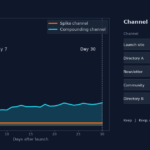



AI assistants can influence consumer purchases without leaving a conventional data trail. According to the Interactive Advertising Bureau (IAB), consumers are 2.5 times more likely to visit a brand’s website within a week after receiving an AI recommendation, yet only 8.8% of these visits are attributed to AI referrals. The IAB’s AI-Era Attribution Blueprint, unveiled on November 12, 2026, seeks to address this measurement gap by redefining how AI-driven interactions are measured and credited in consumer purchase journeys.
- Implement IAB’s AI-Era Attribution Blueprint to accurately measure AI’s impact on customer journeys.
- Use AI-specific evidence standards to differentiate between observed, reported, and inferred AI influences.
- Track AI visibility and influence through structured data and incrementality testing.
Context/Background
The IAB’s release of “The AI-Era Attribution Blueprint” on November 12, 2026, marks a pivotal moment in digital marketing measurement. The blueprint introduces a framework that challenges traditional analytics by highlighting the hidden influence of AI in consumer purchase pathways. It emphasizes the need to capture AI interactions that initiate demand, often missed by conventional methods focusing on final clicks from search or direct traffic.
By classifying conversions into Human-Owned, AI-Assisted, and AI-Executed pathways, the blueprint proposes that marketers can better attribute credit to the stages where AI plays a role. This approach aims to ensure that marketing investments are aligned with the true source of demand generation, rather than merely the channel that captures the final sale. The IAB clarifies that while the blueprint does not replace existing models, it adds a crucial layer to understanding AI’s role in customer journeys.
How to Implement AI Attribution
Step 1: Establish AI Attribution Pathways
Begin by classifying your conversions according to the IAB’s proposed pathways: Human-Owned, AI-Assisted, and AI-Executed. For example, the company Profound uses tools to measure brand visibility in AI answers, helping distinguish between direct consumer engagement and AI-influenced decisions. This classification helps identify where AI contributes to the buying process, providing a clearer picture of its impact.
Step 2: Implement Comprehensive Tracking Systems
Develop robust tracking systems that capture AI interactions across platforms. Use tools like Similarweb to analyze AI recommendation impacts on website traffic and conversions. Implement UTM parameters, promo codes, and post-purchase surveys to trace AI’s role in the customer journey. This data collection will enable more accurate attribution and resource allocation.
Step 3: Use AI-Specific Evidence Standards
Adopt AI-specific standards to separate different types of influence evidence. The IAB suggests labeling results as observed, reported, inferred, or incrementally proven. For instance, an AI platform might report a recommendation, but it’s crucial to validate this with independent data, such as sales lift from controlled tests. This approach ensures that AI visibility is not misinterpreted as direct conversion evidence.
Step 4: Conduct Incrementality Testing
Conduct controlled experiments to measure AI’s true impact. Compare audience segments with varying levels of AI visibility and analyze the differences in branded search traffic, conversion rates, and revenue. Such testing helps differentiate between AI-stimulated demand and conventional search or direct channel traffic, providing actionable insights for marketing strategies.
Advanced Perspective
The IAB blueprint highlights a fundamental shift in how digital marketers must approach attribution. By focusing on the nuanced roles of AI in consumer journeys, marketers can better allocate resources to the stages of influence rather than just the points of conversion. Experts suggest that structured data such as product feeds and schema markup will become increasingly important for AI systems to process and cite brand information accurately.
Additionally, the blueprint’s call for AI platforms to disclose whether recommendations are paid or organic underscores the need for transparency. This transparency can help marketers understand the true influence pathways and make informed decisions about where to invest their efforts. The challenge remains in accessing comprehensive data, as AI platforms often control the environments where these interactions occur, limiting independent verification.
Common Mistakes
One common mistake is over-relying on branded search as an indication of AI influence without examining upstream interactions. This can mislead marketers into crediting the wrong channels. Instead, track AI-originated traffic and analyze its role in the customer journey.
Another error is treating AI visibility as a direct conversion metric. Without proper evidence standards, this can result in overestimating AI’s revenue impact. Use incremental testing to validate AI-driven sales claims.
Lastly, failing to integrate structured data can hinder AI systems from accurately interpreting brand information. Ensure that your website’s technical SEO supports machine interpretation to improve AI-generated answers and visibility.
Write For UsExplore the IAB’s AI-Era Attribution Blueprint to refine your measurement strategy and ensure AI-driven influences are accurately captured and credited in your marketing efforts.